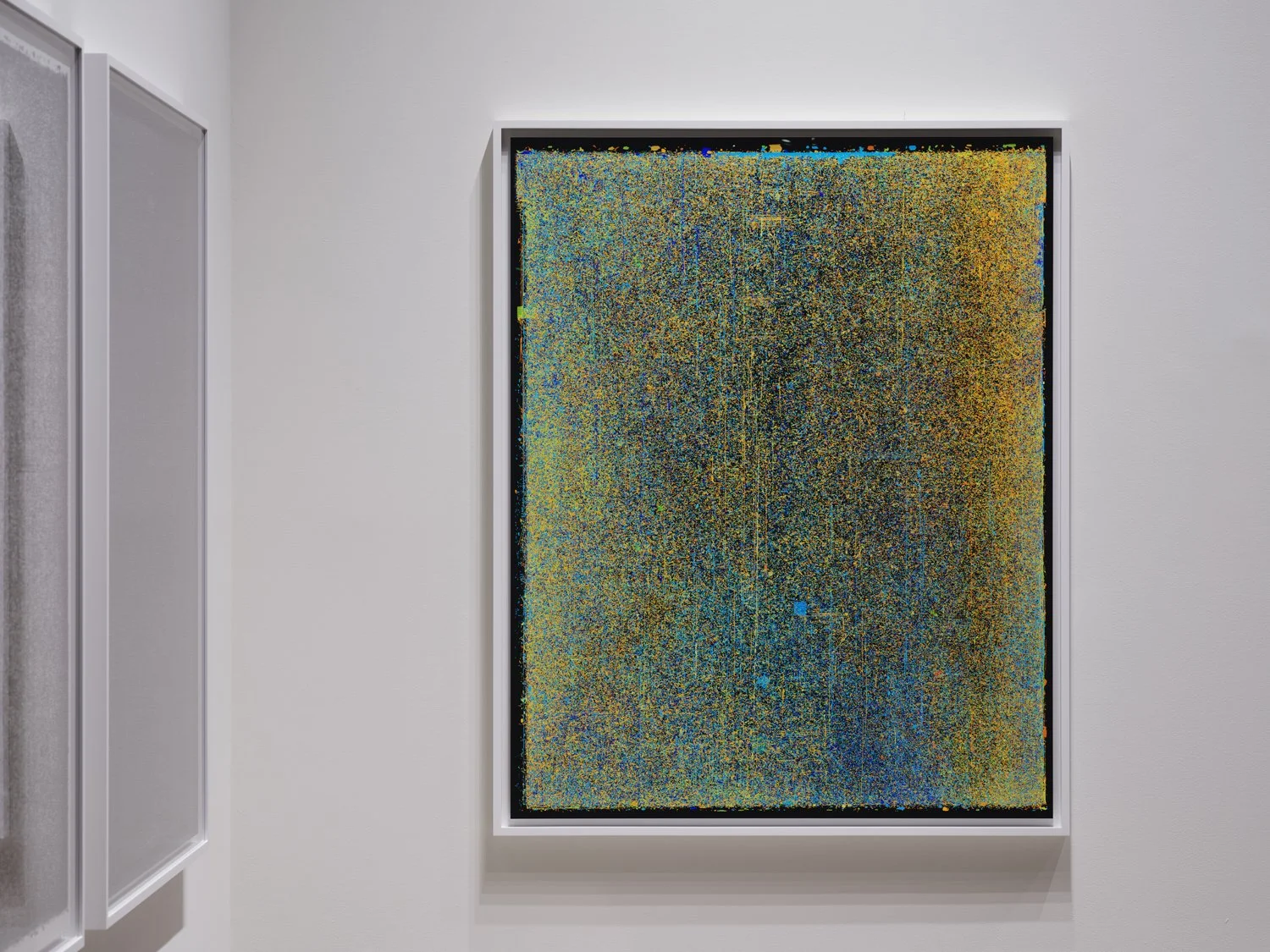
STRATO-, 64 1/2" x 51 3/4" (Framed chromogenic print)
STRATO-
To create a photograph is to recognize two distinct realities, severing one to elevate the other. In extracting light from shadow, the conscious gaze selects and preserves, pushing everything deemed unsuitable into the realm of the discarded. What survives is a beautified, fabricated illusion sustained entirely by the erasure of its counterpart. It is a medium that assumes reality rather than looking directly at it. Yet, what is excluded never truly disappears; it remains embedded within the margins of the image and reality itself.
STRATO– begins by rejecting this contrived subject. Instead of revealing what the original photograph meant to show, the work intentionally pivots to face the discarded world. By turning toward what has been hidden, erased, or treated as error, the series gives structure and presence to the ephemeral. The dust, noise, and residue become not flaws, but evidence of another reality.
What the conscious gaze forgets and discards is, in fact, the primal landscape of our genesis. What emerges is an alternative world constructed from what the medium usually leaves behind, revealing this rejected space not as a void, but as the ultimate reality. While its form is transient, its transformation is infinite. Reflecting the perpetual, cyclical laws of the universe, the landscape laid bare is elemental: light, dark, and cosmic dust.
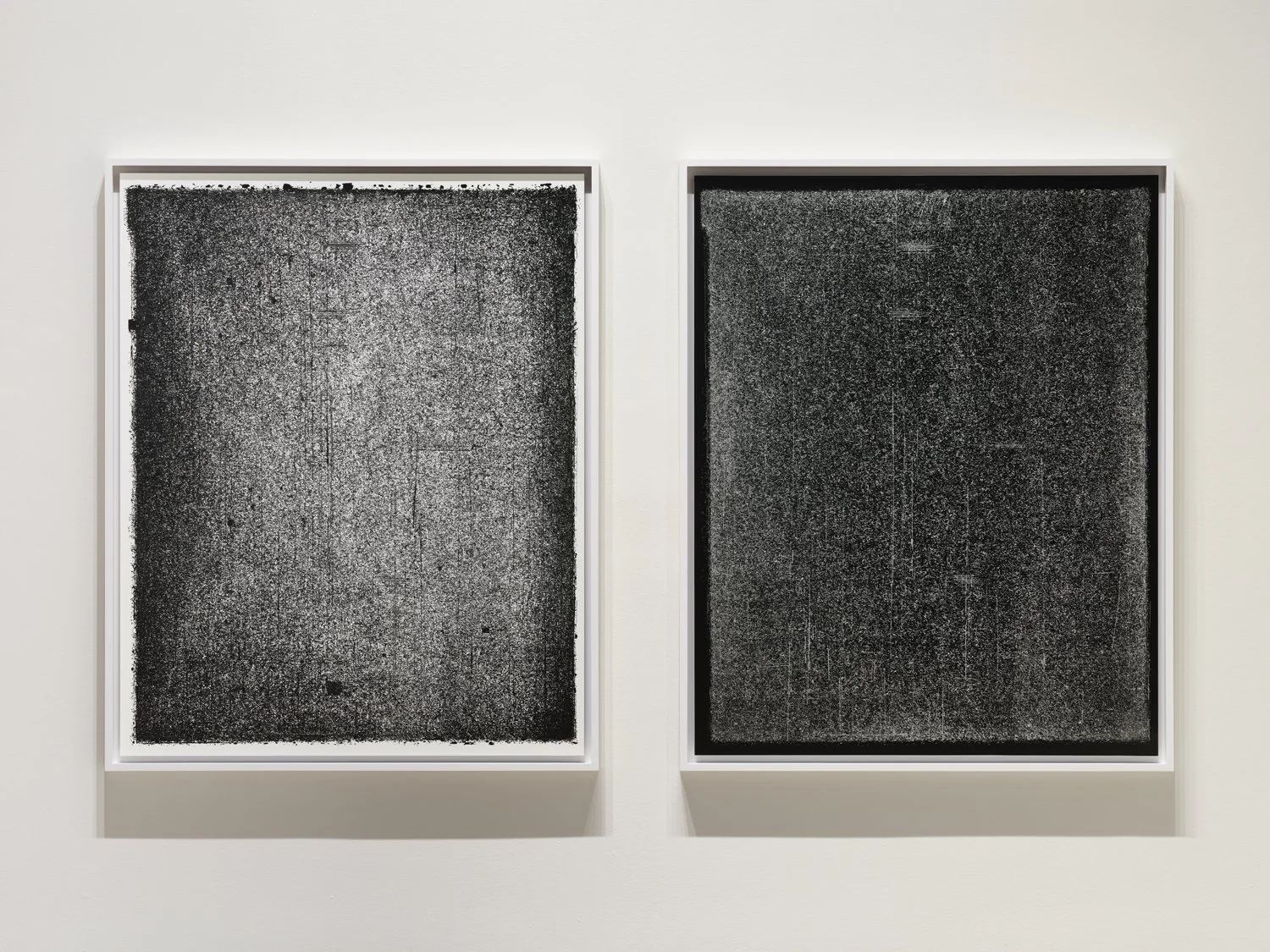
STRATO–, 59 13/16" x 48" (Framed gelatin silver print)
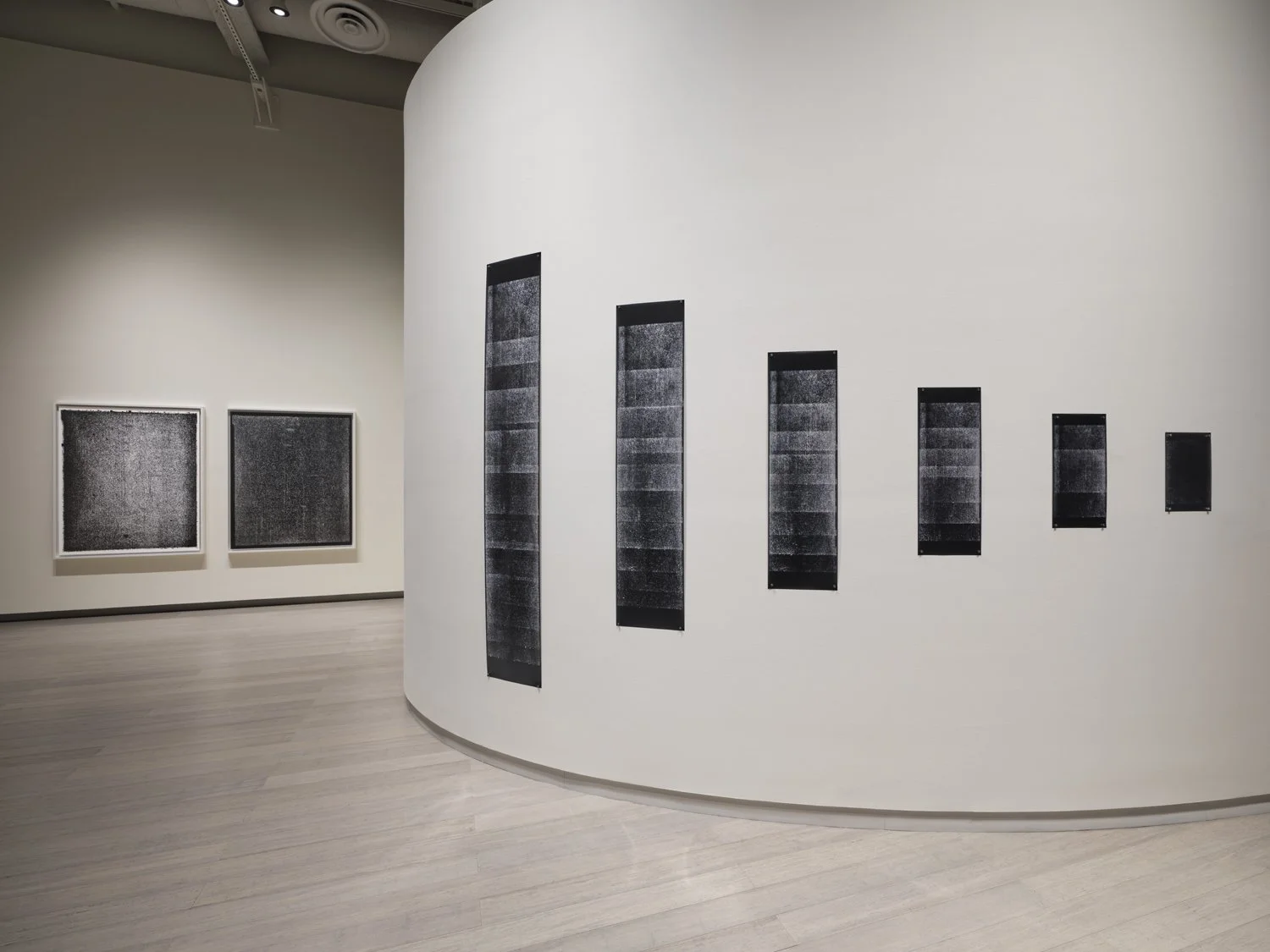
STRATO-, 80" x 13 3/16", 55 3/8" x 11 7/8", 38 3/8" x 10 13/16", 26 1/2" x 9 13/16", 18 1/8" x 8 7/8", and 12 1/4" x 8 1/8" (Six unframed vellum internegatives with pigment ink print)
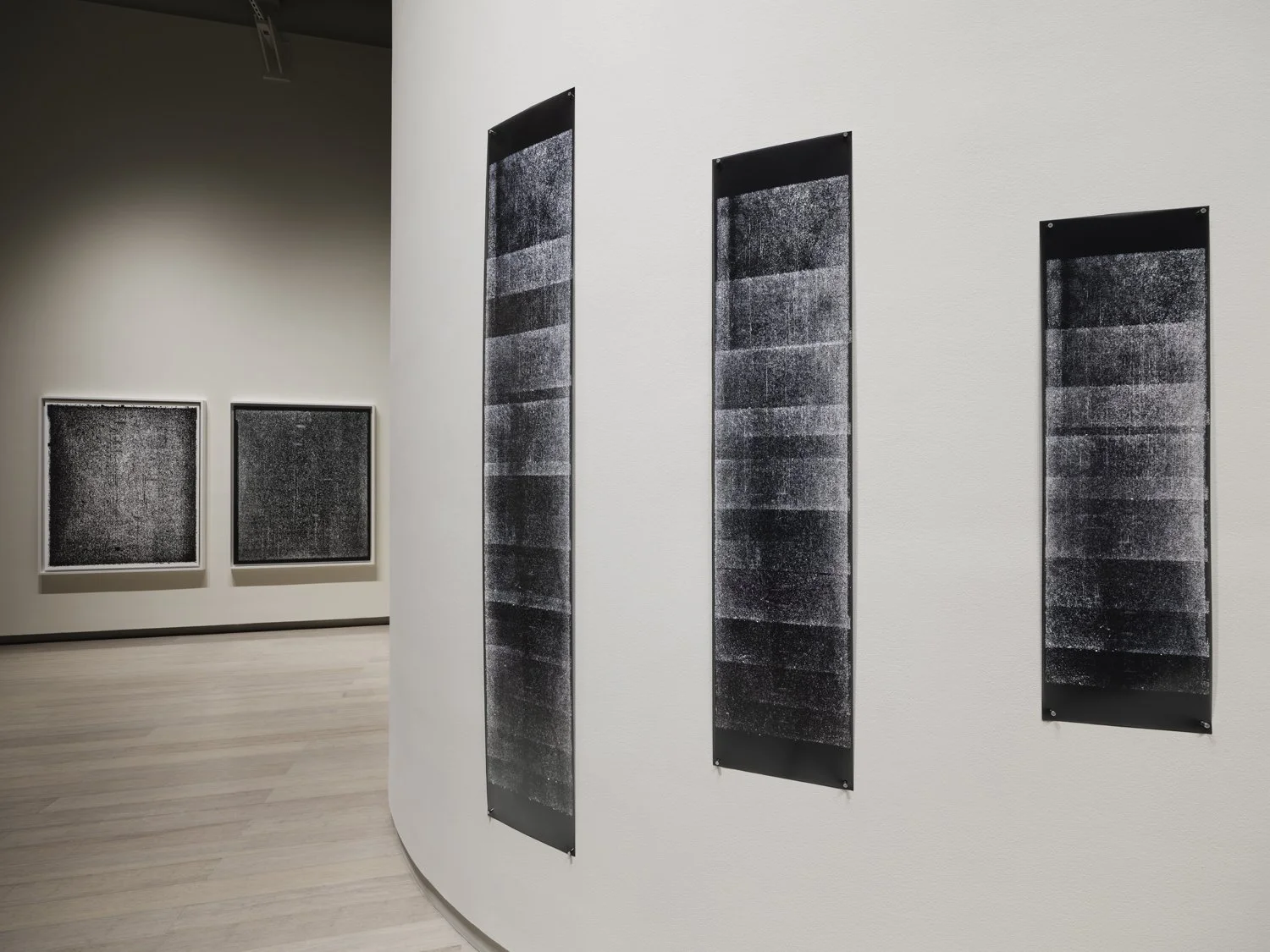
STRATO–, 80" x 13 3/16", 55 3/8" x 11 7/8", and 38 3/8" x 10 13/16"(Vellum internegatives with pigment ink print)
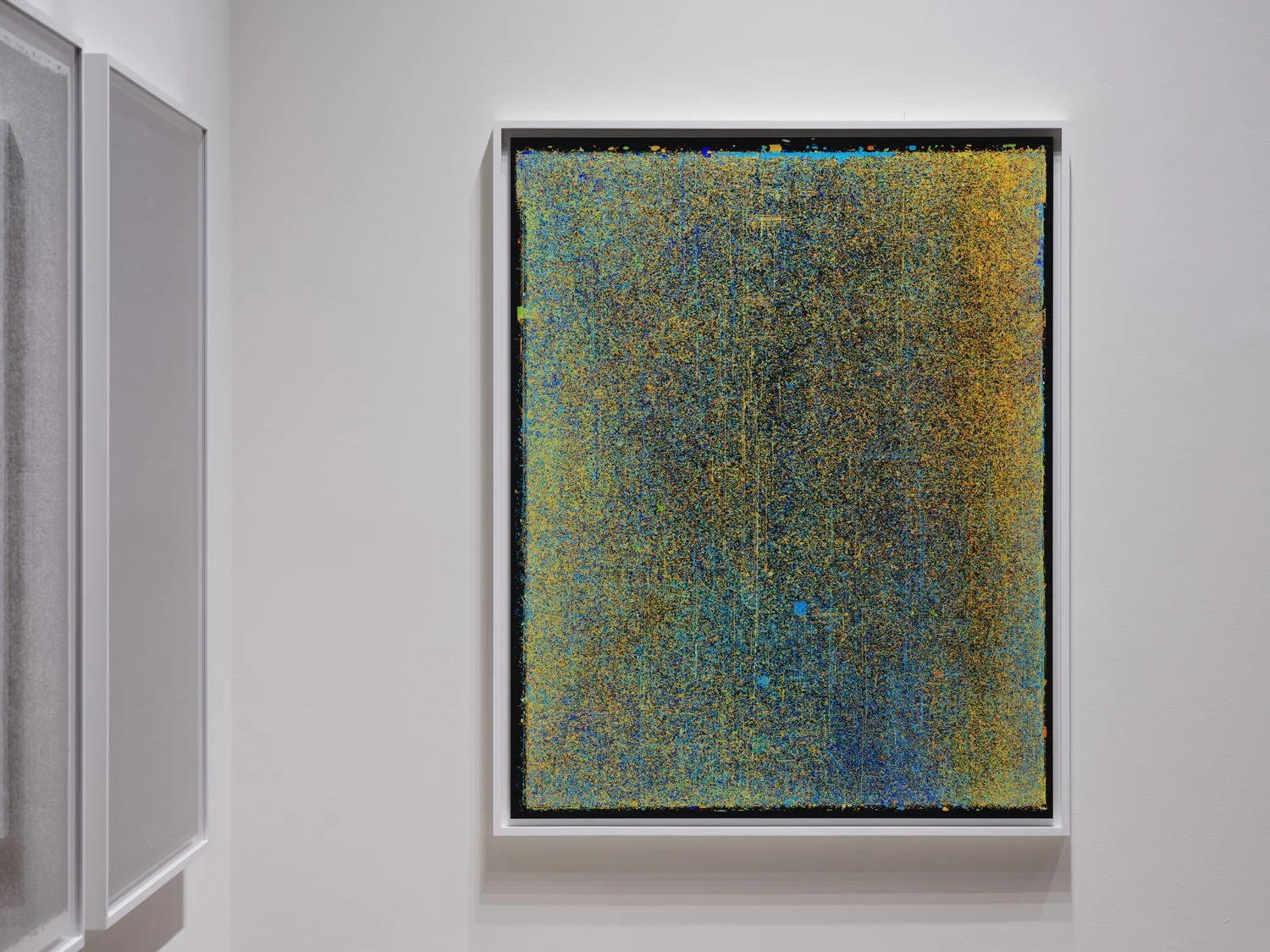
STRATO-, 64 1/2" x 51 3/4" (Framed chromogenic print)
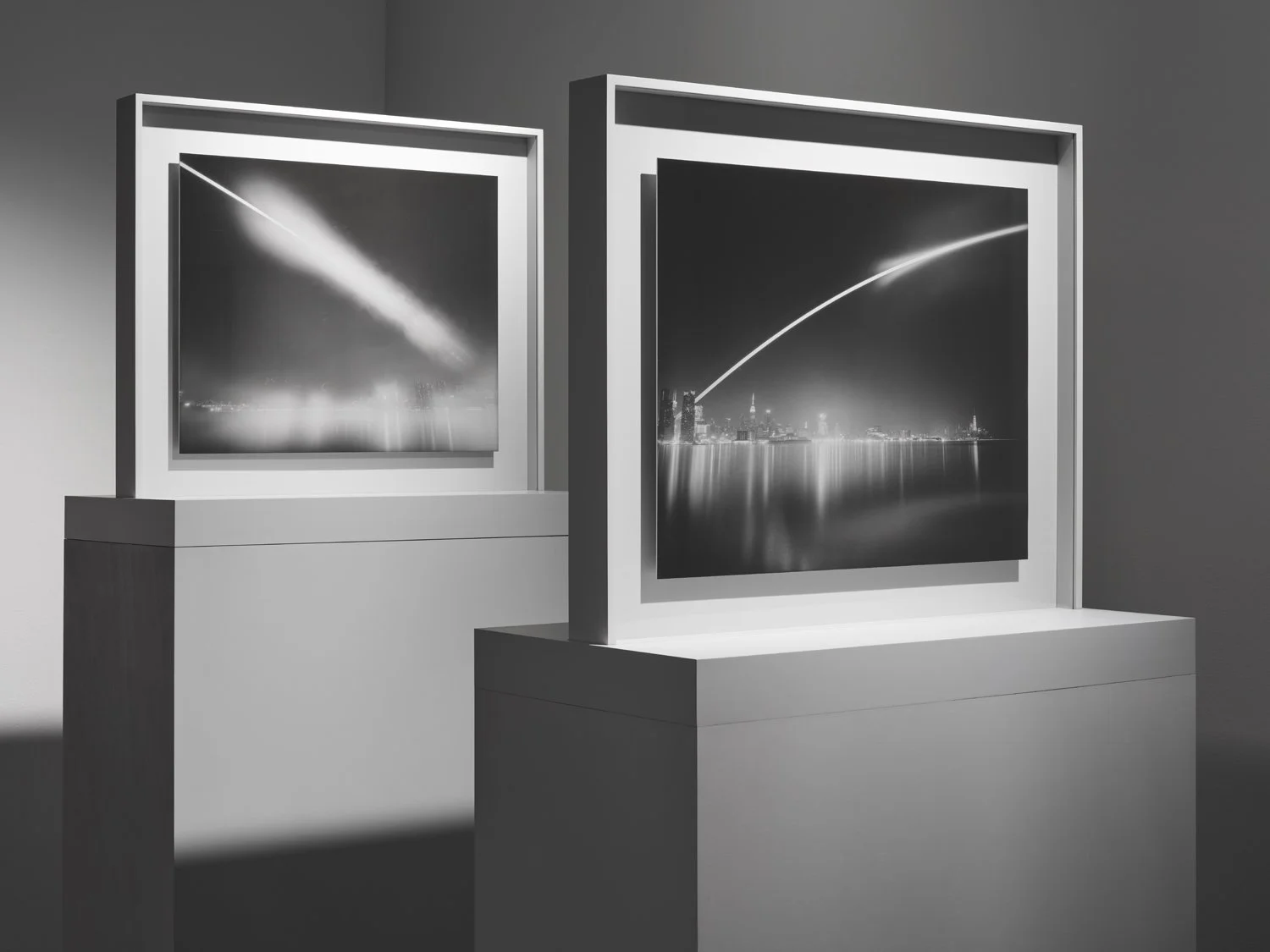
SELENO– (installation view) , SELENO-, 2015-0507-2345-0508-0509, 2015 27 1/2" x 32" x 3 3/16" (Double-sided gelatin silver prints, custom open frame) SELENO-, 2016-1012-2151-1013-0332, 2016 27 1/2" x 32" x 3 3/16" (Double-sided gelatin silver prints, custom open frame) Pedestal heights correspond to the peak lunar altitude of each exposure.
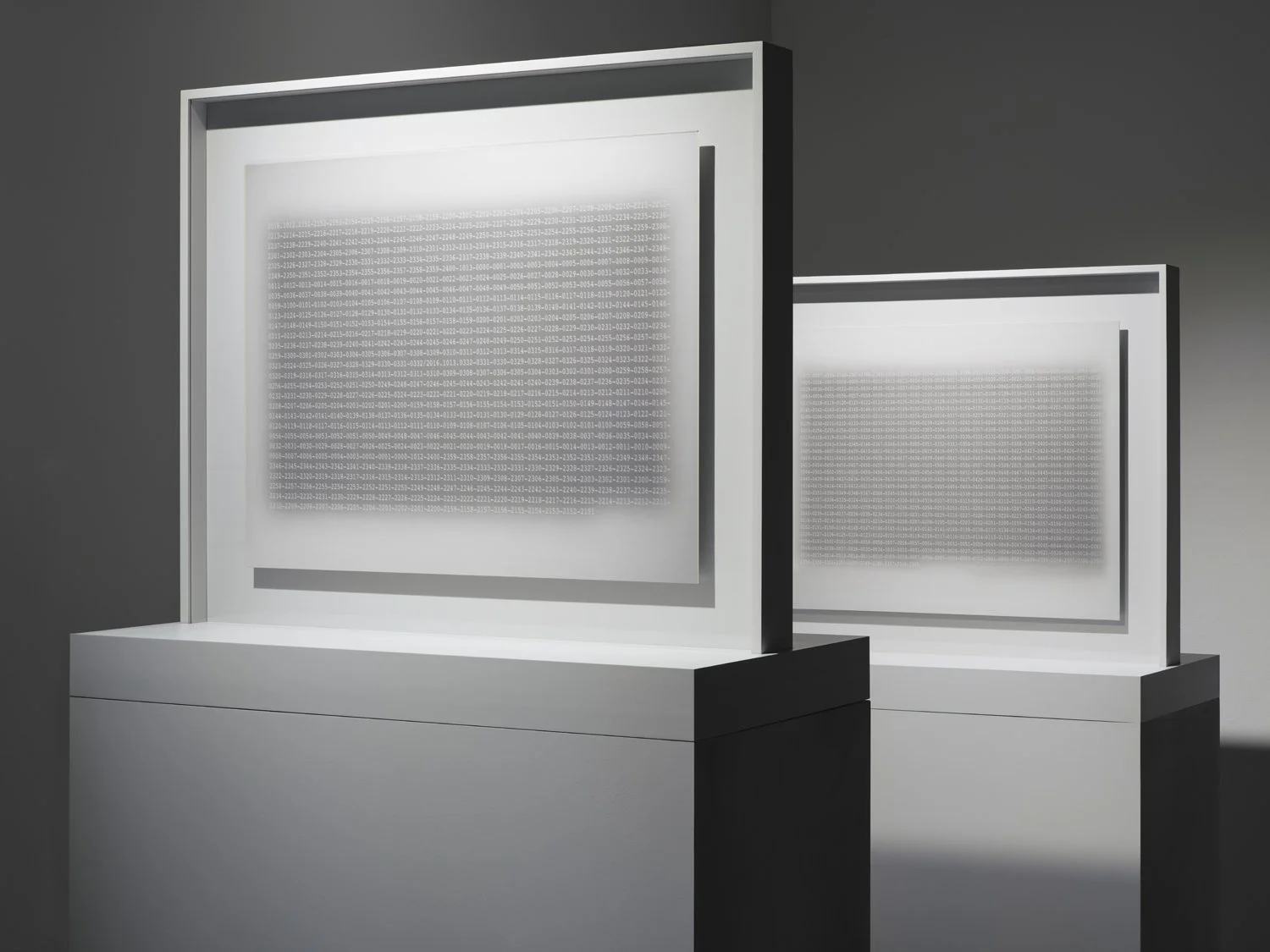
SELENO– (installation view, another side ) , SELENO-, 2015-0507-2345-0508-0509, 2015 27 1/2" x 32" x 3 3/16" (Double-sided gelatin silver prints, custom open frame) SELENO-, 2016-1012-2151-1013-0332, 2016 27 1/2" x 32" x 3 3/16" (Double-sided gelatin silver prints, custom open frame) Pedestal heights correspond to the peak lunar altitude of each exposure.
SELENO-
SELENO- is an ongoing, decade-long project initiated in 2014 that emerges from a sustained inquiry into time as a lived and material condition. It unfolds at the intersection of two intertwined temporal systems: the universal, celestial time that governs natural cycles, and the human-constructed time shaped by productivity, spatial organization, and the accelerated rhythm of New York City. Within the city, time dissolves into a continuous sequence of temporary moments—measured less by clock time than by speed, output, and repetition. Leaving New York and returning reveals a distinct temporal shift, exposing the gap between external stillness and the city’s self-contained tempo.
Within New York, and particularly Manhattan, time operates as a condensed and intensified condition. The island’s geological isolation—its schist foundation and insular geography—compresses space into vertical density and concentrates duration, amplifying a rhythm that diverges from its surrounding environment. Time appears denser here, as if the island itself functions as an instrument that modulates how time is experienced rather than merely observed. Between cosmic cycles and urban acceleration, time becomes both tangible and elusive—something that can be traced, accumulated, and materialized, yet never fully possessed.
To engage these coexisting temporal systems, I photograph the moon’s trajectory in relation to the tides of the East and Hudson Rivers, using celestial movement and tidal fluctuation as instruments for measuring time itself. Photography functions not as documentation, but as a durational and meditative act—an extended negotiation with motion, stillness, and duration. Positioned at the city’s edge, the work maintains a necessary distance—allowing urban acceleration and celestial rhythm to be observed within the same temporal field. Each image incorporates typographic notations corresponding to its exposure time, allowing time to register as accumulation rather than instant. Clockwise and counterclockwise orientations reflect the act of looking and revisiting, suggesting a reversal inherent in the attempt to observe what has already passed.
Environmental variables—such as wind speed, wind direction, and film development time—directly shape the typography’s density and blur, permitting external conditions to inscribe themselves into the image. Time is not only represented, but enacted. The typography functions as a visual mass, allowing duration to be apprehended as density and volume rather than read as discrete units. In installation form, the photographs are mounted on pedestals whose heights correspond to the moon’s highest altitude at the moment of exposure, translating celestial geometry into architectural space.
As a whole, SELENO- operates between observation and embodiment, inviting viewers to inhabit the temporal interval between what unfolds and what remains—where time is experienced not as a fixed measure, but as a condition shaped by duration, return, and disappearance.
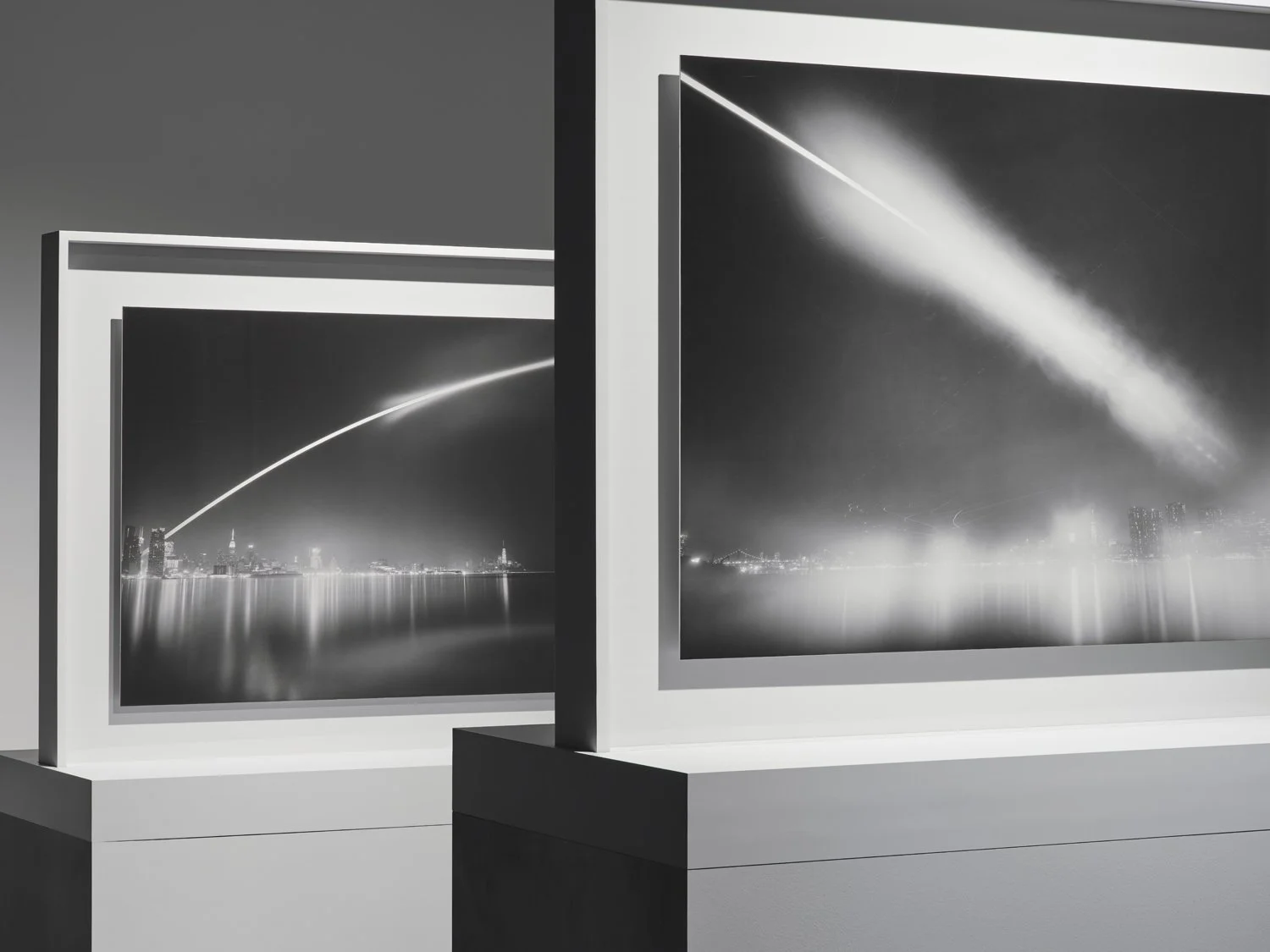
SELENO– (installation view, front) — photograph
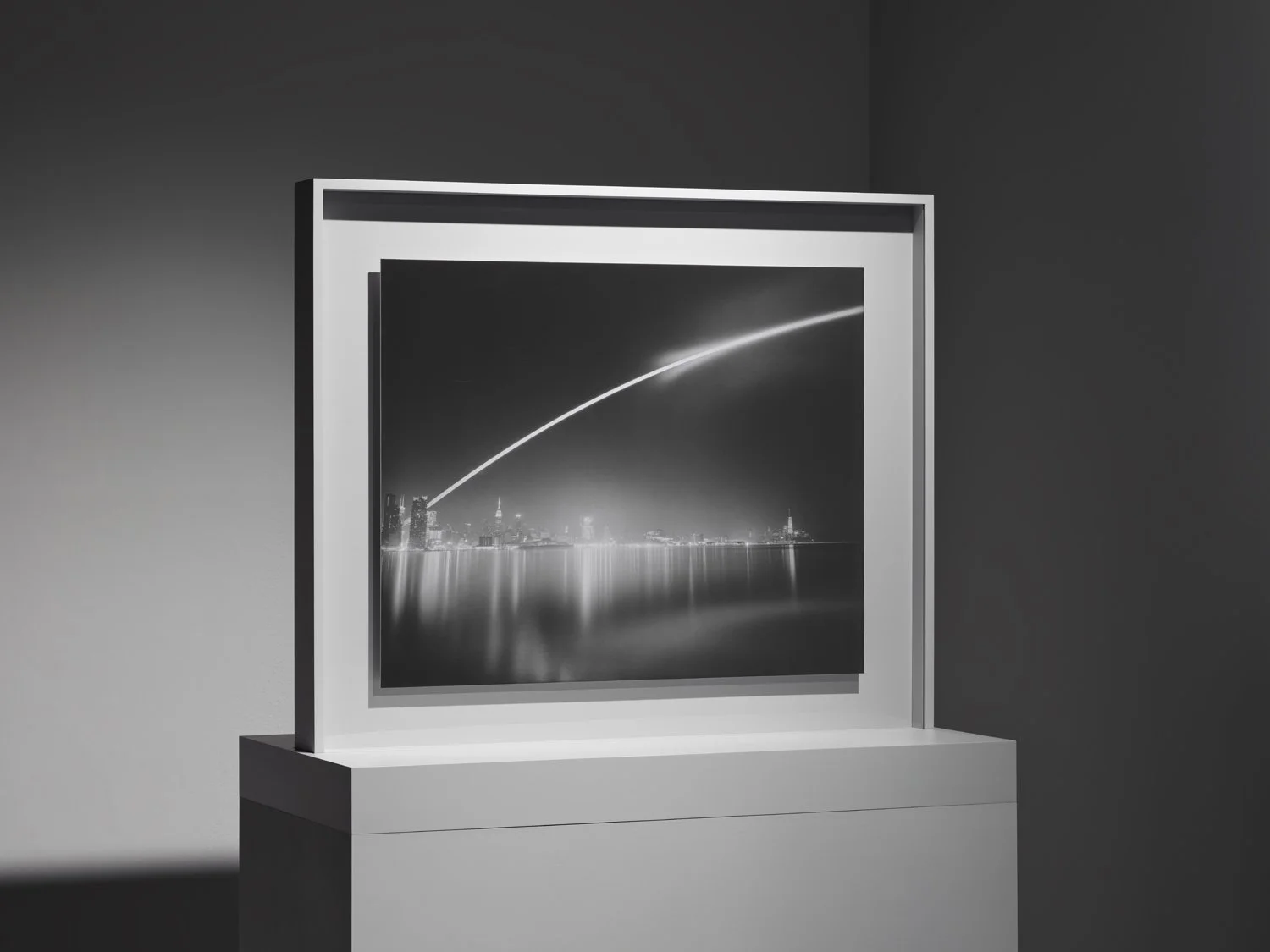
SELENO-, 2015-0507-2345-0508-0509, 2015, 27 1/2" x 32" x 3 3/16" (Double-sided gelatin silver prints, custom open frame)
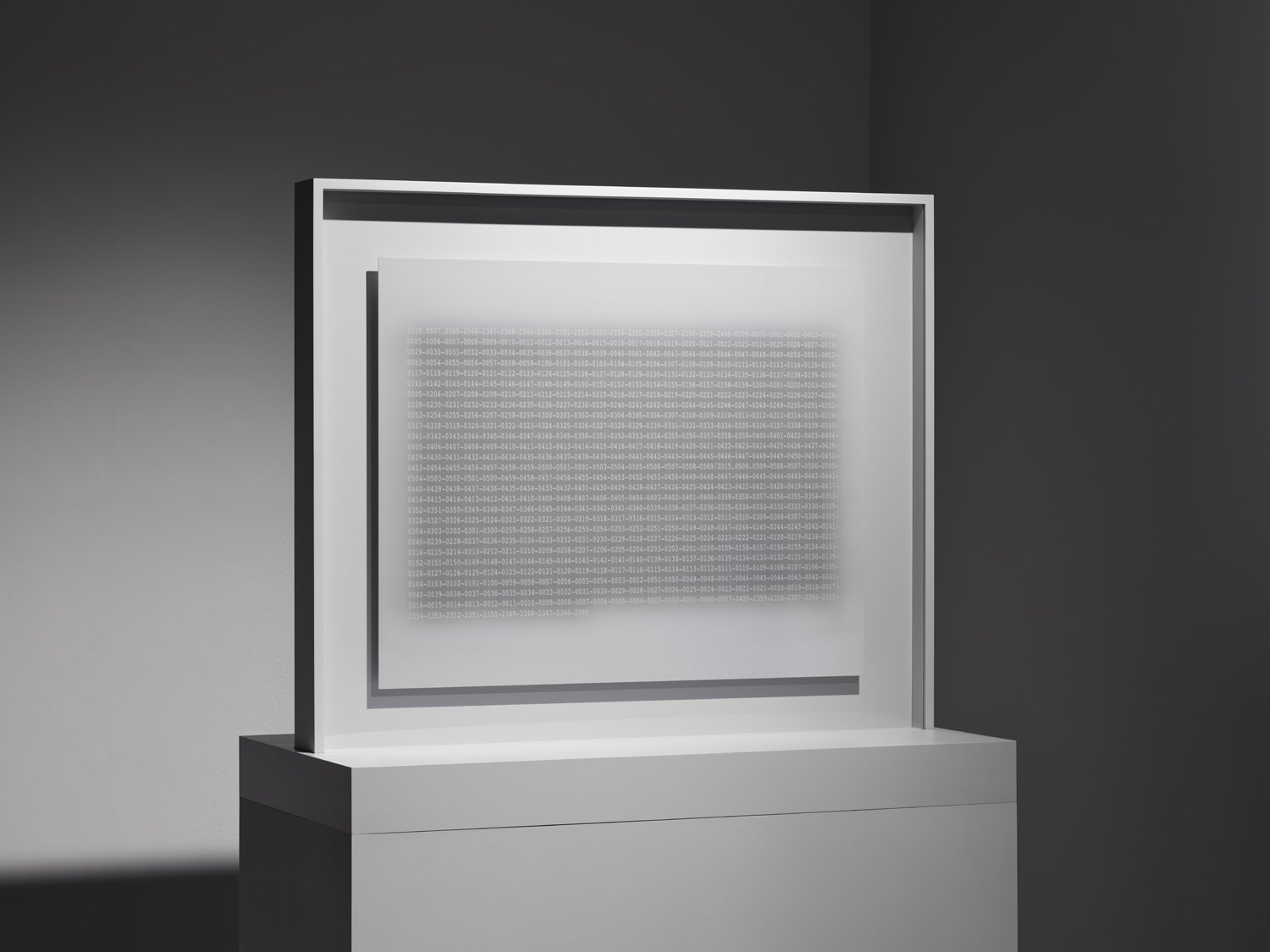
SELENO-, 2015-0507-2345-0508-0509, 2015, 27 1/2" x 32" x 3 3/16" (Double-sided gelatin silver prints, custom open frame)
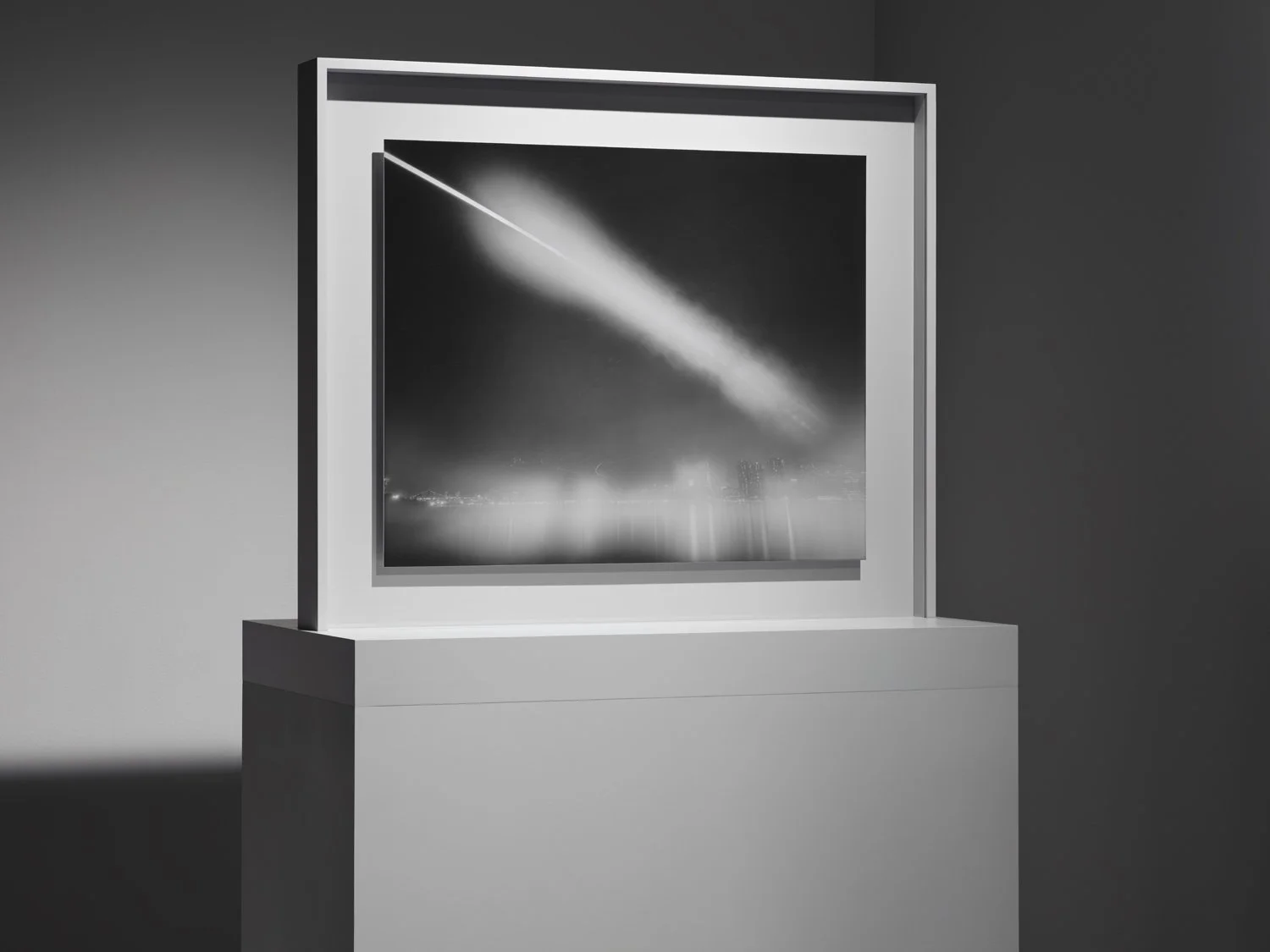
SELENO-, 2016-1012-2151-1013-0332, 2016, 27 1/2" x 32" x 3 3/16" (Double-sided gelatin silver prints, custom open frame)
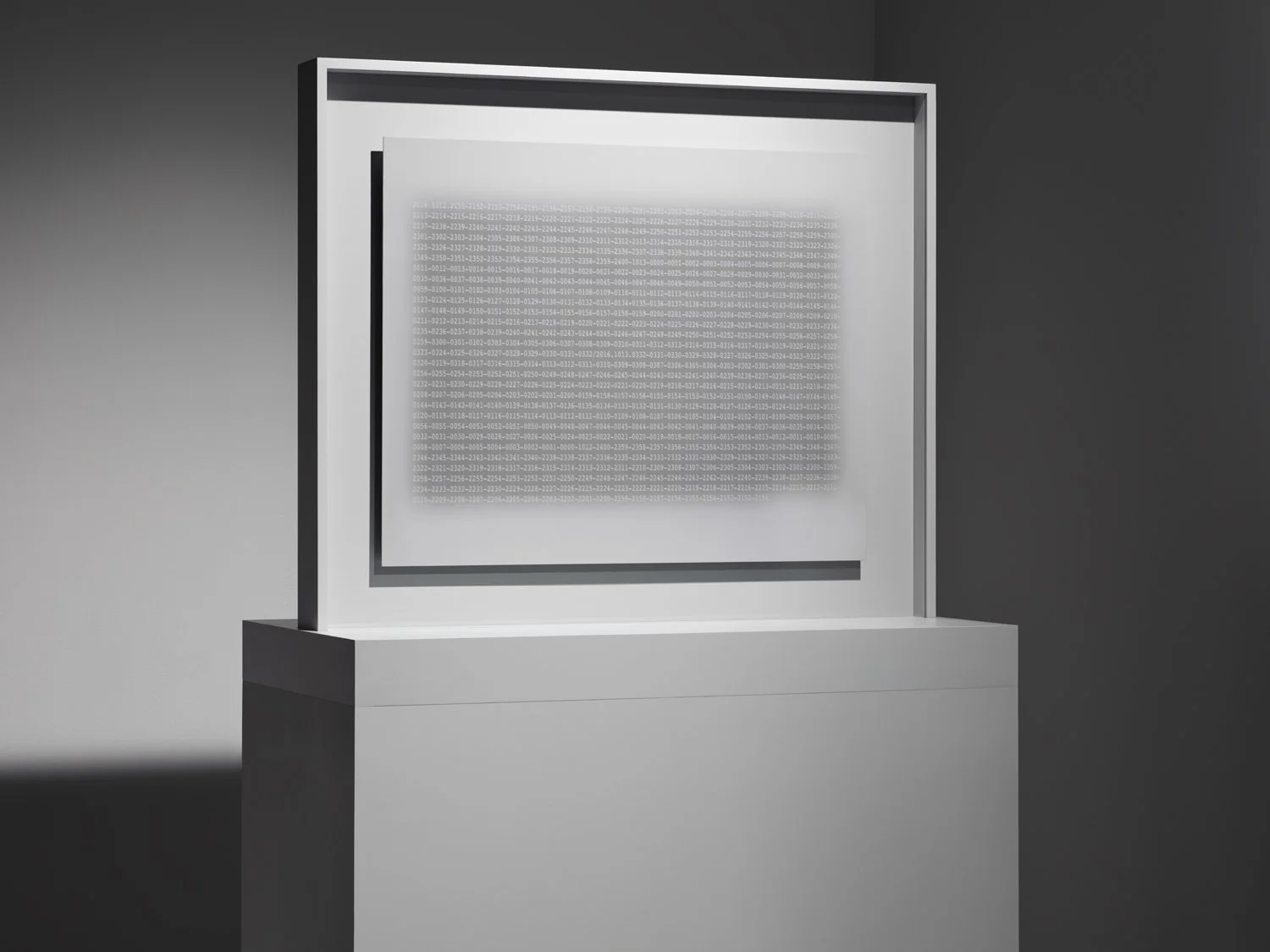
SELENO-, 2016-1012-2151-1013-0332, 2016, 27 1/2" x 32" x 3 3/16" (Double-sided gelatin silver prints, custom open frame)
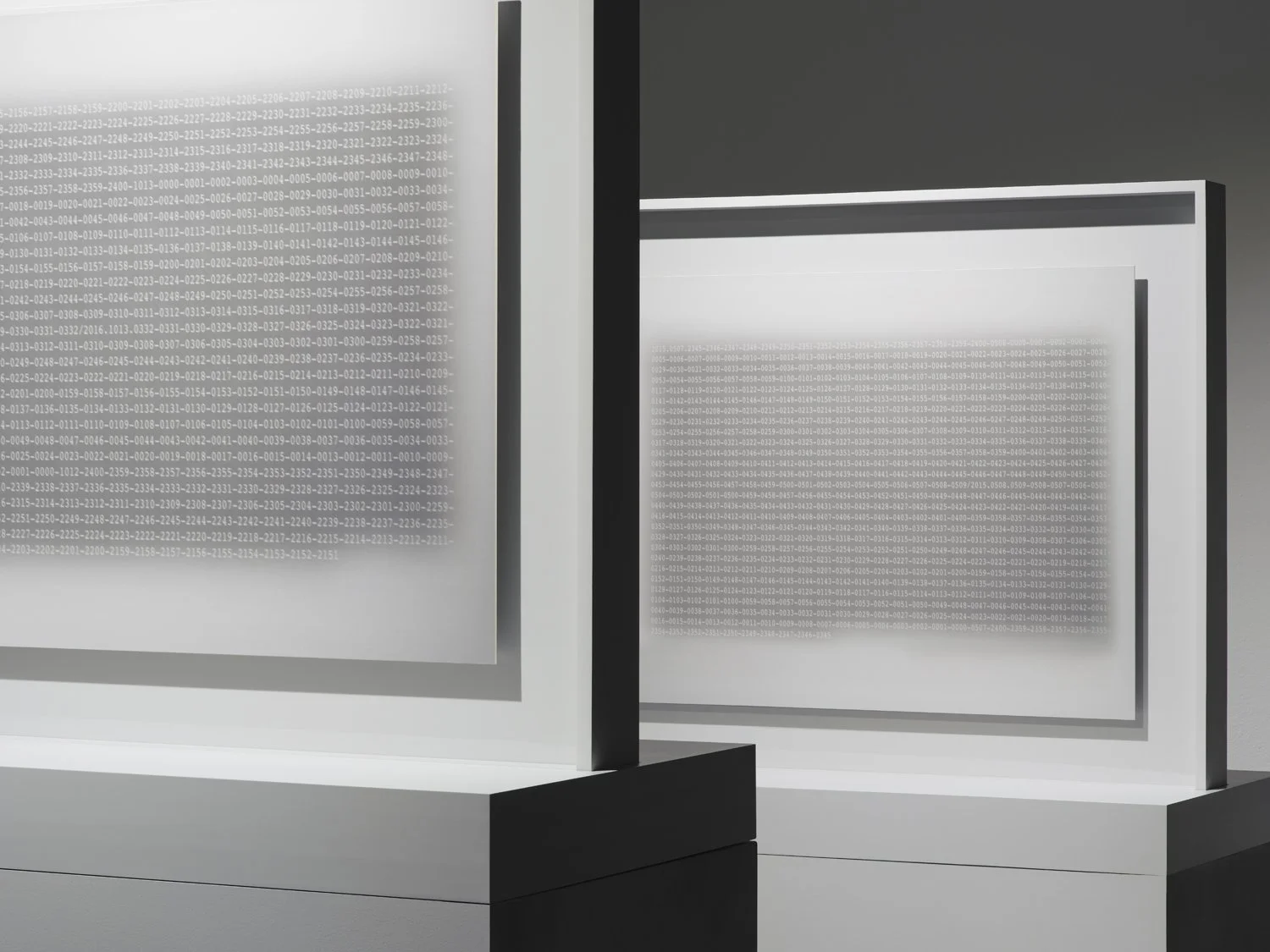
SELENO– (installation view, back) — typography

18.75 x25 inches, Archival Pigment Print
PHAGO-
PHAGO- is a series of still-life photography that explores the aesthetics and aestheticization of food. I explore the formal qualities of fresh food as an aesthetic object and simultaneously critique how the beautification of food serves to mask the reality behind our everyday food consumption.
When I started shopping at farmers’ markets and seeing more organic forms of fresh produce there, I noticed the ‘unnatural’ uniformity in size and shape in fresh produce at conventional supermarkets. I (was) also (inspired by historical depictions of fresh food markets, such as Joachim Beuckelaer’s Fish Market 1568, and) became interested in how the untampered display of seafood at more traditional fish markets confronts us with the raw reality of the food chain, of life and death.In comparison, I found it absurd how seafood and meat are packaged and displayed in supermarkets to remove the concept of death and make the food more appealing to the consumer.
My work can be seen as a cynical representation of the reality of the fresh food we consume, exposing the aesthetic veneer and revealing the absurdity and even cruelty involved in producing and distributing our food. At the same time, my work also captures the moments of aesthetic pleasure one might find in looking at fresh food in the daily routine of selecting and handling it, or placing it in a container to store in a refrigerator or freezer.
When I am looking for an object to photograph, my perception of fresh food is different from when I am looking for food to eat (in fact, I never eat the food that I photograph). This shifting of perception is reflected in how the fish or vegetables oscillate between food and aesthetic object in my work. My photographs of fish, in particular, could be seen as unsettling or even grotesque representations of food. However, it is the artistic object that highlights the concept of life and death and invites the viewer to find beauty in it. In this way, my work employs aesthetics to reveal what is intrinsic to our food consumption rather than concealing it.
My work embodies not only the contemporary culture of hyper-awareness around food, but also my own conscious decisions regarding health and ethics over simply satisfying my appetite. In this way, my photographs of fresh food depict the intersection of human desire and morality, and interrogate how we perceive food differently depending on our value systems. As such, my work explores the aesthetics of ambivalence at the intersection of beauty and the grotesque, life and death, and desire and morality.

18.75 x25 inches, Archival Pigment Print

18.75 x25 inches, Archival Pigment Print

18.75 x25 inches, Archival Pigment Print

18.75 x25 inches, Archival Pigment Print

18.75 x25 inches, Archival Pigment Print

18.75 x25 inches, Archival Pigment Print
22:17=1.294
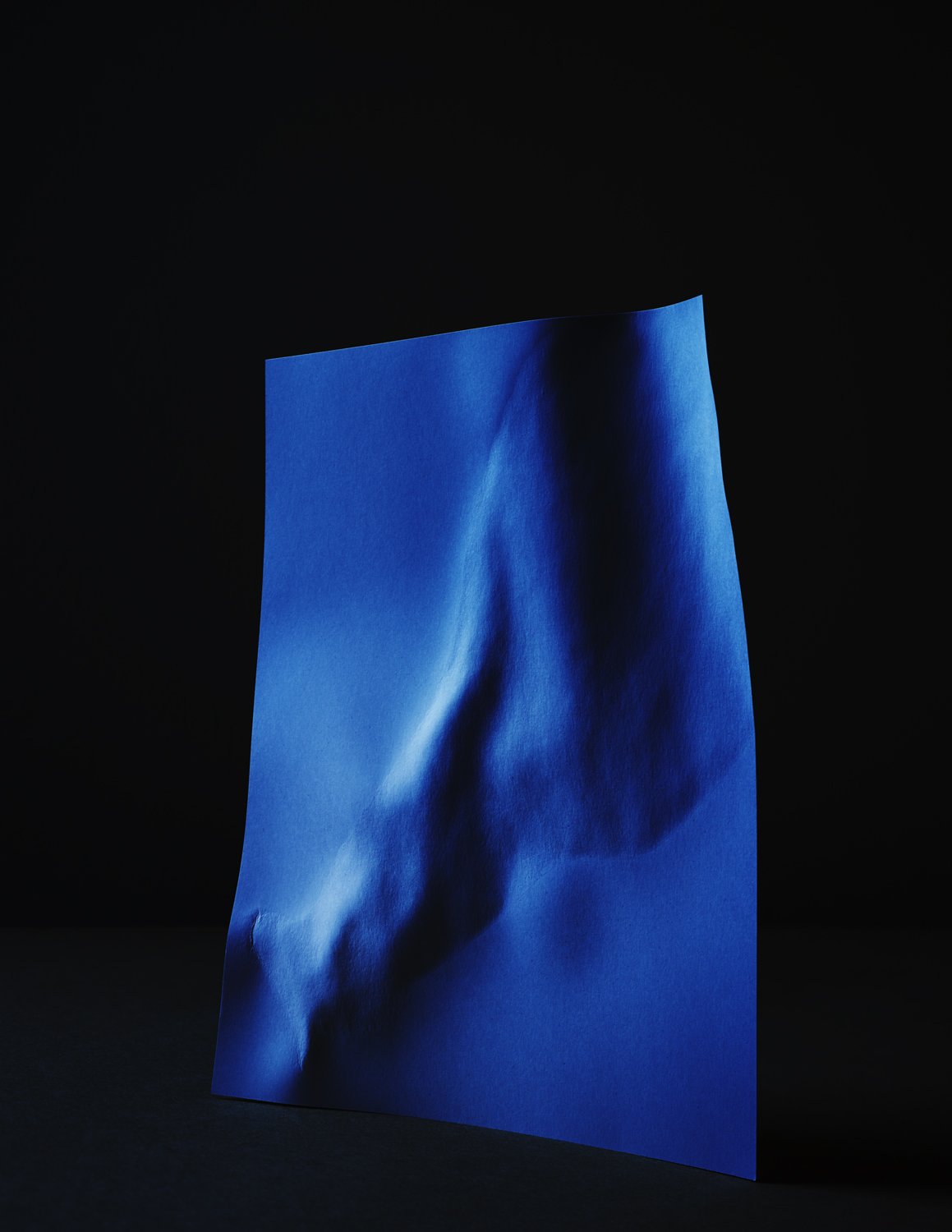
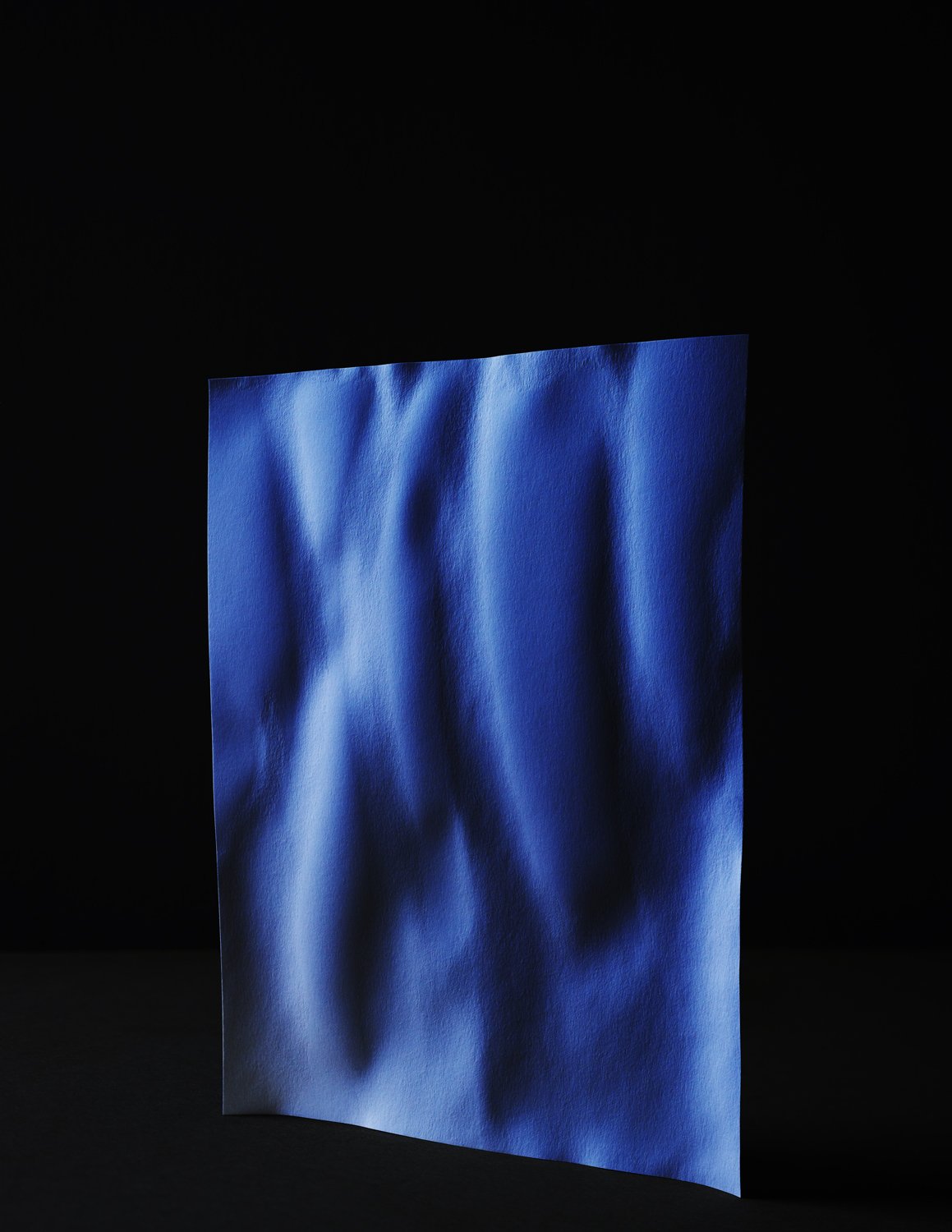
Manipulating letter-sized paper through organic and artificial means, this body of photographic works encapsulates our capacity to envisage new possibilities from limited information contained within constraints. Navigating through constraints provided by standardized camera and printing formats is intrinsic to working with photography. In considering the notion of format constrains, I became interested in the most widely used format of our daily lives: letter size, with its aspect ratio of 22:17=1.294 creating bounds within which all types of information is contained.
The process of gaining new information can be likened to moving toward light in darkness to enter a previously unknown world or opening the door to a new room. Exploring this idea, I photographed letter-size paper contrasted against a dark background, whereby the visual information on the paper symbolizes a view of an unknown landscape that can be seen from a dimly lit room. Departing from my previous landscape works, this series of still-life photography explores how abstract visual information contained within standard paper might evoke images of unfamiliar landscapes through the use of colour, composition and texture.
Drawing upon my continuous exploration of the interplay between the natural and artificial, this series combines processes based on chance and control: including mindfully tearing paper, wetting the paper, letting humidity dictate how it warps, and manipulating colour. The tear in the paper resembles the passage of the moon seen in the night sky; the paper shaped by humidity embodies natural formations; and the saturated colours reflect the light source changing with the time of the day. These organic and artificial visual elements interact on letter-size paper, creating an allusion of a fragmented view and inviting the viewer to imagine unfamiliar landscapes. In this way, this body of work highlights how we process limited information to discover new possibilities.


© 2026 AKIRA KAWAHATA / ALL COPYRIGHT RESERVED