SELENO-
SELENO- is an ongoing, decade-long project initiated in 2014 that emerges from a sustained inquiry into time as a lived and material condition. It unfolds at the intersection of two intertwined temporal systems: the universal, celestial time that governs natural cycles, and the human-constructed time shaped by productivity, spatial organization, and the accelerated rhythm of New York City. Within the city, time dissolves into a continuous sequence of temporary moments—measured less by clock time than by speed, output, and repetition. Leaving New York and returning reveals a distinct temporal shift, exposing the gap between external stillness and the city’s self-contained tempo.
Within New York, and particularly Manhattan, time operates as a condensed and intensified condition. The island’s geological isolation—its schist foundation and insular geography—compresses space into vertical density and concentrates duration, amplifying a rhythm that diverges from its surrounding environment. Time appears denser here, as if the island itself functions as an instrument that modulates how time is experienced rather than merely observed. Between cosmic cycles and urban acceleration, time becomes both tangible and elusive—something that can be traced, accumulated, and materialized, yet never fully possessed.
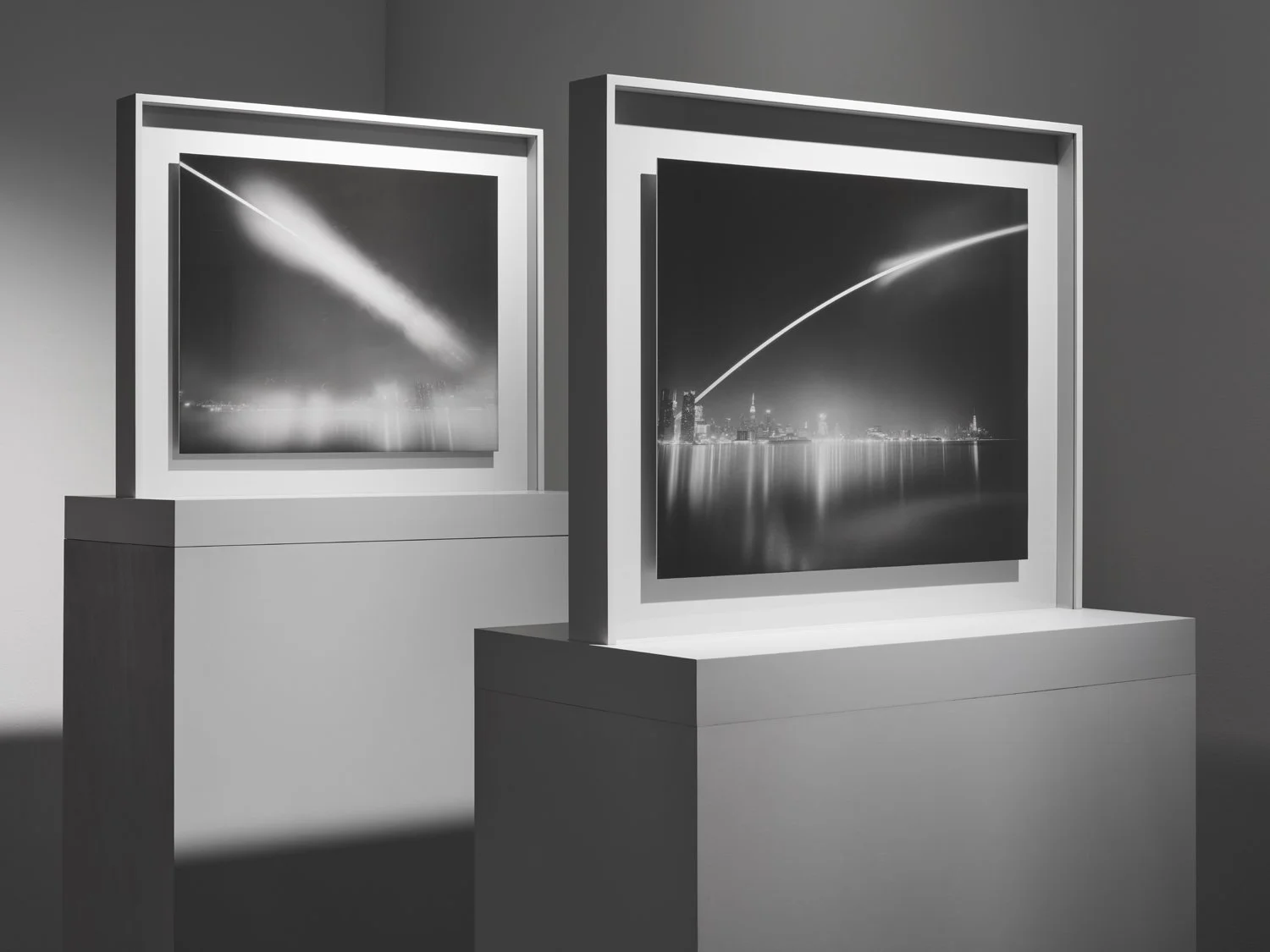
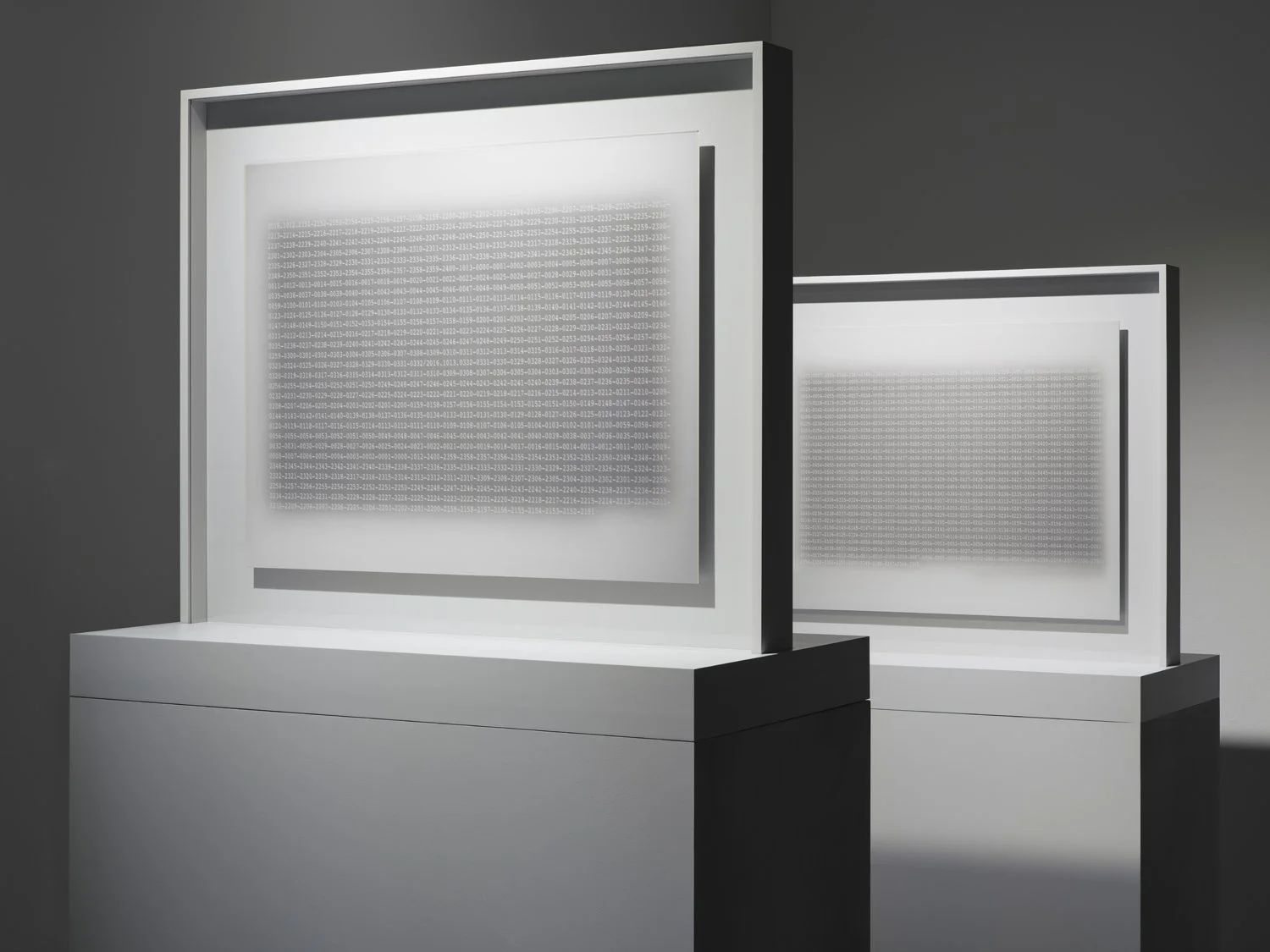
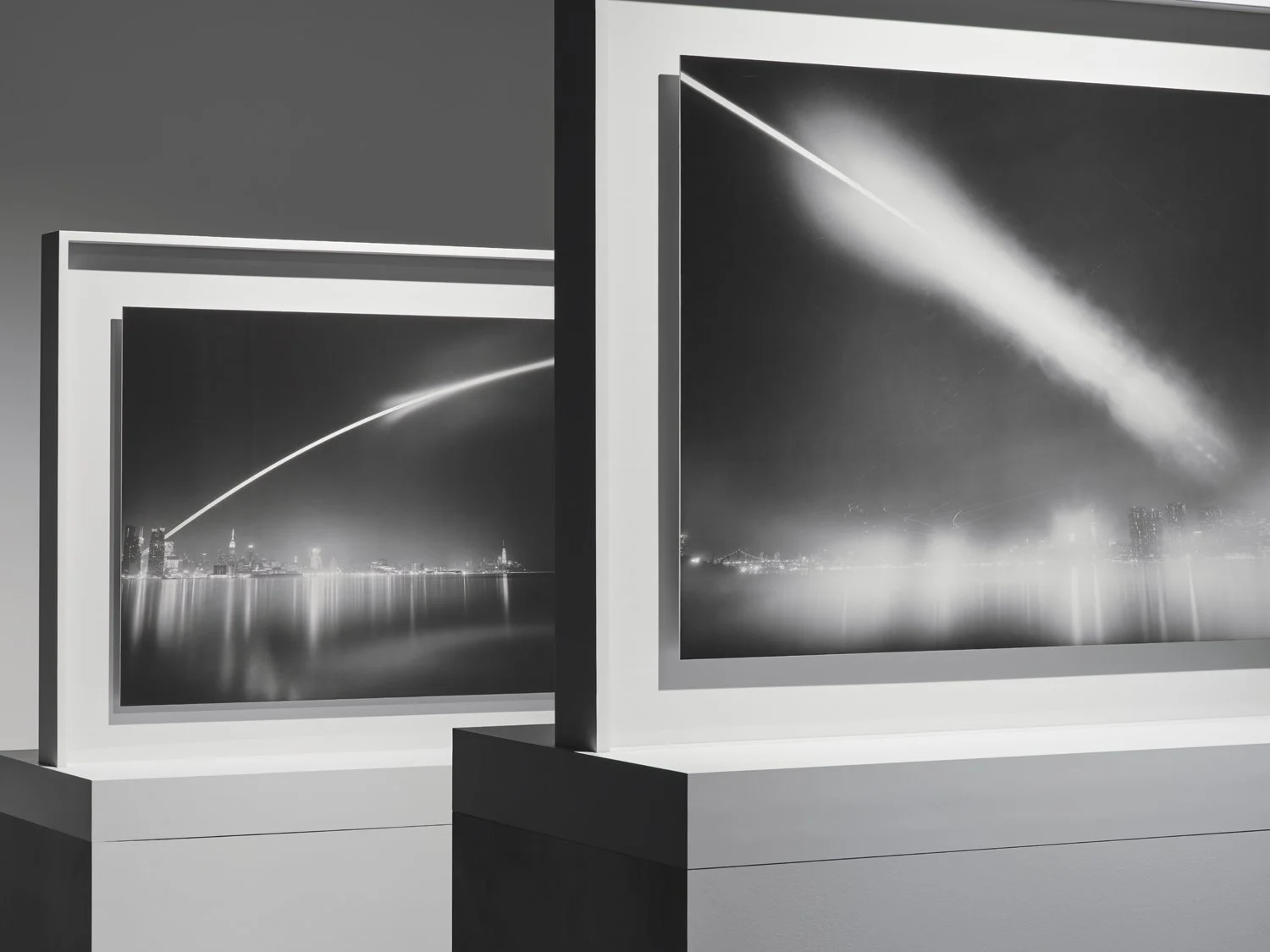
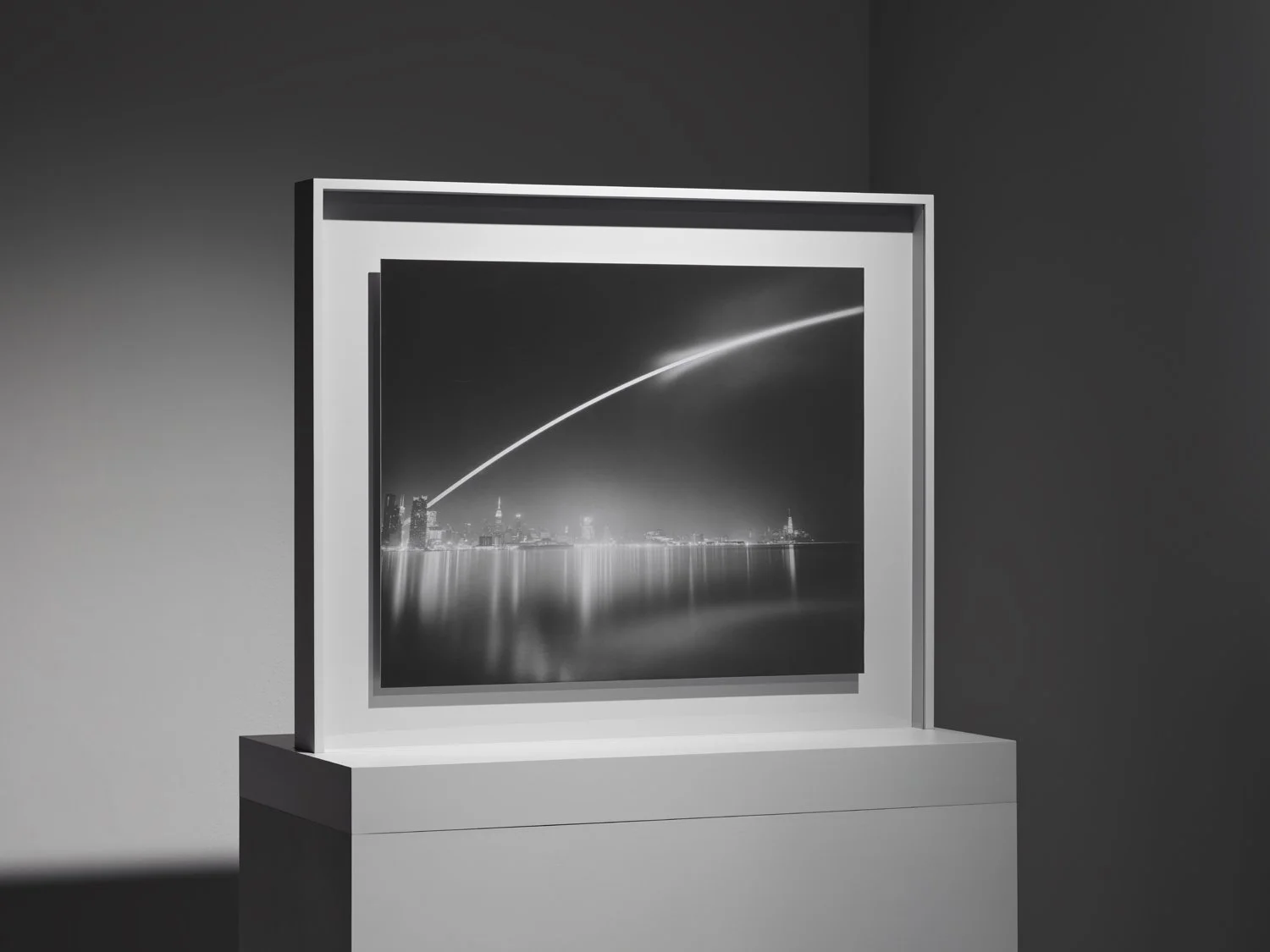
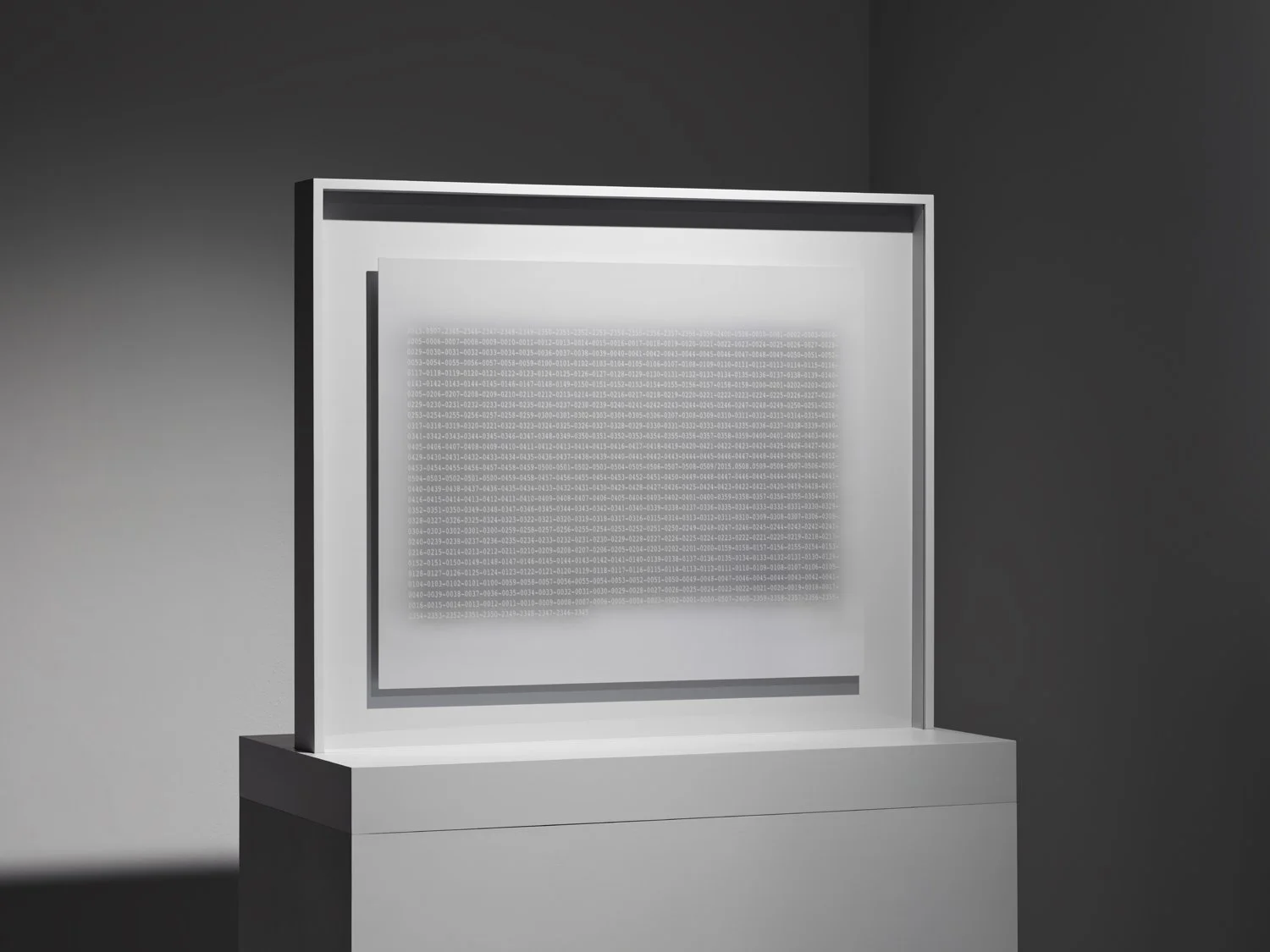
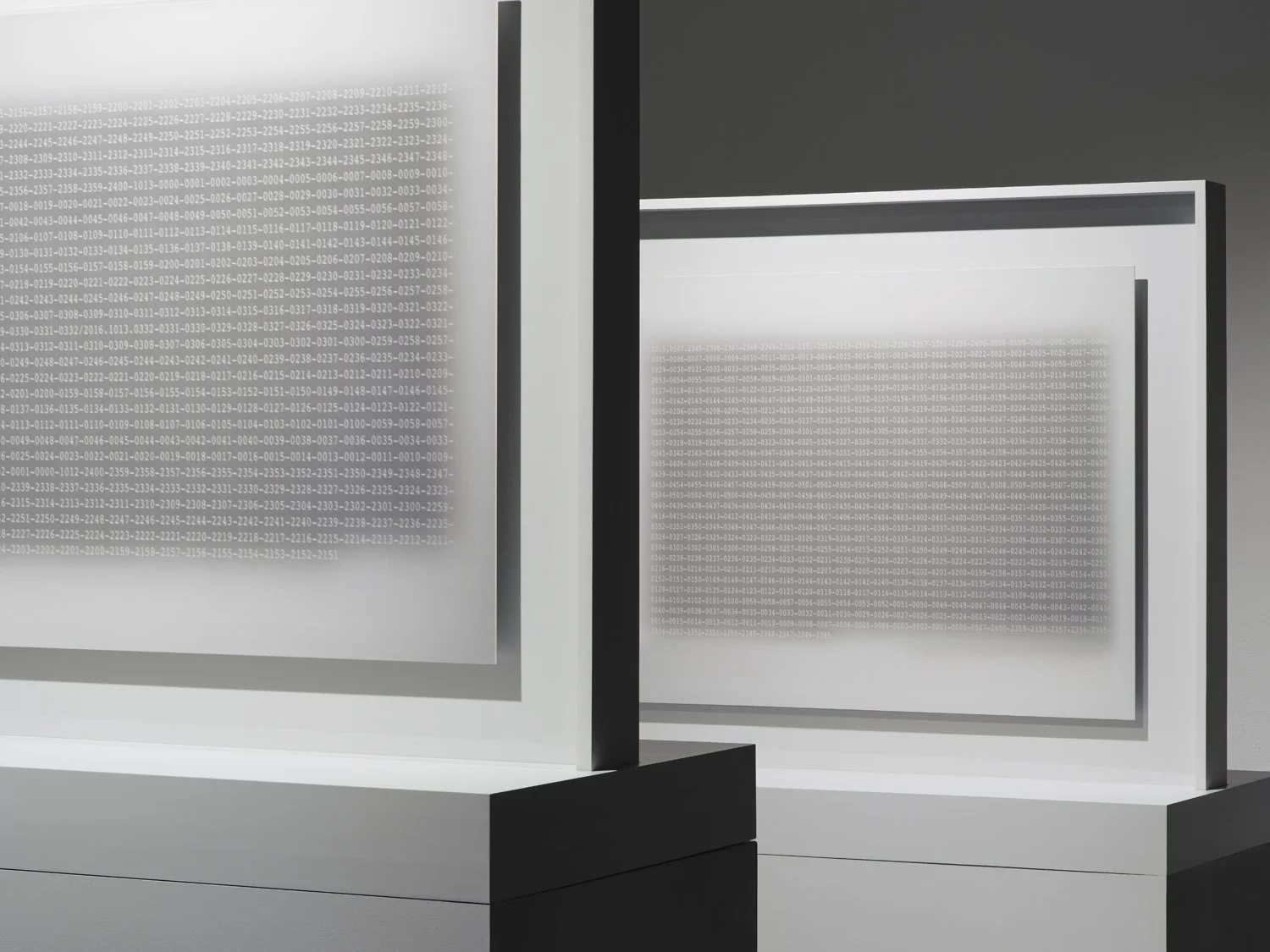
To engage these coexisting temporal systems, I photograph the moon’s trajectory in relation to the tides of the East and Hudson Rivers, using celestial movement and tidal fluctuation as instruments for measuring time itself. Photography functions not as documentation, but as a durational and meditative act—an extended negotiation with motion, stillness, and duration. Positioned at the city’s edge, the work maintains a necessary distance—allowing urban acceleration and celestial rhythm to be observed within the same temporal field. Each image incorporates typographic notations corresponding to its exposure time, allowing time to register as accumulation rather than instant. Clockwise and counterclockwise orientations reflect the act of looking and revisiting, suggesting a reversal inherent in the attempt to observe what has already passed.
Environmental variables—such as wind speed, wind direction, and film development time—directly shape the typography’s density and blur, permitting external conditions to inscribe themselves into the image. Time is not only represented, but enacted. The typography functions as a visual mass, allowing duration to be apprehended as density and volume rather than read as discrete units. In installation form, the photographs are mounted on pedestals whose heights correspond to the moon’s highest altitude at the moment of exposure, translating celestial geometry into architectural space.
As a whole, SELENO- operates between observation and embodiment, inviting viewers to inhabit the temporal interval between what unfolds and what remains—where time is experienced not as a fixed measure, but as a condition shaped by duration, return, and disappearance.